Afraid of Injections and Always Running Away? Sedation Oral Films Help Pets Stay Calm for Treatment
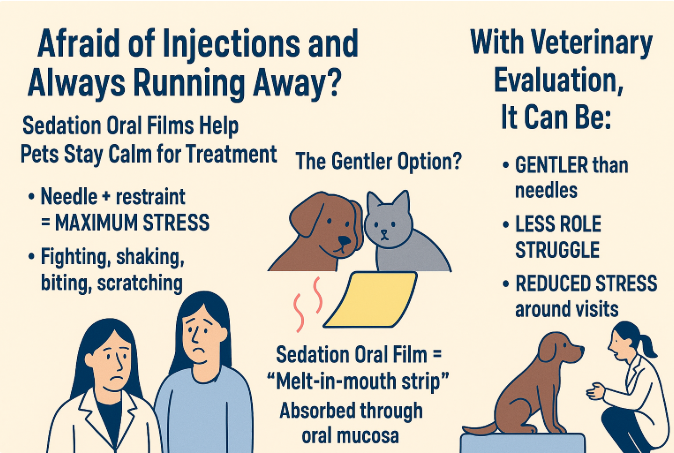
Many cats and dogs are not just “a bit nervous” at the vet.
They shake, hide, scratch, bite, and fight every second of the visit.
For these animals, every injection or forced pill turns into a small trauma.
Sedation oral films offer a gentler option for these “needle-phobic” pets. When used under veterinary supervision, they can reduce stress around medical procedures, grooming, and travel by turning “hold him down!” into “let’s help you relax first”.
1. The Real Problem: Stress Around Needles, Clinics, and Restraint
Common signs that a pet is struggling with traditional sedation methods:
Panic as soon as the carrier or leash appears
Hiding under furniture, clawing, or biting when leaving home
Intense resistance at the clinic: growling, scratching, snapping
Needing two or three people to hold the animal still for injections
Refusing food or treats at the hospital because of fear
After the visit, avoiding the carrier, the vet clinic door, or even the owner’s hands
This constant cycle of fear is bad for everyone:
The pet associates every visit with terror and pain
Owners feel guilty and anxious before every appointment
Veterinary staff must work under higher risk of bites and scratches
Some procedures get delayed or skipped because “it’s just too stressful”
2. What Is a Sedation Oral Film and Why Is It Gentler?
A sedation oral film is a very thin strip that contains a sedative or calming medication for animals.
The film is placed on the tongue or inside the cheek, where it dissolves quickly and is absorbed through the oral mucosa.
Key advantages compared with injections or forced tablets:
No needle
The pet does not experience the pain and fear associated with a syringe.No wrestling to swallow a pill
The film melts inside the mouth; there is no need to push tablets down the throat.Better acceptance
Films are small, can be flavored, and are easier to hide in a calm interaction or gentle handling.Mucosal absorption
The active drug can start working after being absorbed through the mouth, without relying solely on passage through the stomach.
Very important:
A sedation oral film is still real medicine, not a treat.
Choice of drug, dose, and timing must always be decided by a veterinarian who knows the animal’s health status.
3. Sedation Injection vs. Tablets vs. Oral Films
Different tools for different situations
| Method | Main Advantages | Main Drawbacks | Typical Use Cases |
|---|---|---|---|
| Sedation injection | Very fast onset; precise dosing; deep sedation possible | Requires clinic visit and needles; high stress; more restraint | Surgery, dental procedures under anesthesia, imaging under full sedation |
| Traditional oral tablets | Can be given at home; no injection needed | Many pets resist pills; risk of spitting or vomiting; slower onset | Long-term anxiety management, chronic conditions |
| Sedation oral film | Thin, easy to accept; no swallowing needed; given at home; mucosal absorption | Must be prescribed and dosed carefully; timing still needs planning | Fearful pets who hate injections, pre-visit calming, grooming, travel |
For pets that are terrified of injections and impossible to pill, sedation oral films often provide the best balance between:
Enough calming effect to allow examination or minor procedures
Less fear and physical struggle
Safer handling for vets, groomers, and owners
4. When Sedation Oral Films Are Especially Helpful
4.1 Pre-visit calming before vet appointments
For extremely anxious animals, a vet may recommend giving a sedation oral film at home before the clinic visit.
By the time the pet arrives:
Heart rate and anxiety may be lower
Handling is easier
Blood draws, X-rays, or basic procedures can be completed with less restraint
This reduces the emotional impact of every vet visit and makes it more likely that owners keep up with important check-ups.
4.2 Grooming, nail trims, and routine procedures
Many pets tolerate vaccines reasonably well but cannot handle:
Nail clipping
Ear cleaning
Mat removal or sanitary shaving
Anal gland expression
A light level of sedation from an oral film can:
Lower the risk of bites and scratches
Reduce the chance of injury from sudden jerking or pulling
Make the experience less frightening, so future visits are easier
4.3 Short-distance travel and diagnostic visits
Some animals become severely distressed in the car or in public transport:
Continuous barking or meowing
Drooling, vomiting, or urinating in the carrier
Trying to escape or attack the carrier door
With veterinary guidance, a sedation oral film can help the pet stay calmer during:
Short trips to the clinic
Dental consultations
Imaging exams that do not require full anesthesia
Specialist visits that involve longer waiting times
The goal is not to make the pet unconscious, but to keep it in a soft, manageable state instead of panic.
5. Practical Guidelines for Owners and Vets
5.1 Which pets might benefit?
Sedation oral films are often considered for:
Dogs and cats that have a history of intense fear or aggression at the clinic
Animals that are difficult or dangerous to inject while fully awake
Pets that have had traumatic experiences with needles or restraint
Animals that need repeated procedures, such as regular grooming, ear treatments, or follow-up exams
They should be used with extra caution or avoided in:
Very young or very old animals
Pets with significant heart, liver, or kidney disease
Pregnant or lactating animals
Pets already receiving other sedatives or psychoactive medications
5.2 How to talk to your veterinarian
Helpful questions to ask:
“My pet is extremely afraid of injections. Are there sedation oral film options that could help?”
“Is my dog/cat a good candidate for a pet calming oral film before visits or grooming?”
“How much time before the appointment should I give the film, and what behavior should I expect?”
“In which situations would we still need injectable sedation instead of a film?”
This shows that the owner is not trying to medicate on their own, but wants to reduce fear safely.
5.3 Tips for giving a sedation oral film at home
Prepare a quiet environment with minimal noise and interruptions
Gently place the film on the tongue or inside the cheek and close the mouth for a moment
Let the pet lick and swallow naturally; do not force water immediately
Watch for changes in behavior over the next 20–60 minutes, depending on the product and vet’s instructions
If there are severe side effects such as collapse, extreme weakness, vomiting, or breathing problems, contact a veterinary clinic at once
FAQ
1. Are sedation oral films safer than injections for all pets?
No single method is safest for every animal. Injections are still necessary for surgery and deep sedation. Sedation oral films can be safer and less stressful for certain anxious pets when used in appropriate doses and situations, but they must always be prescribed and monitored by a veterinarian.
2. Can owners use human sedative films or tablets and just cut them into pieces for pets?
No. Human medicines can be toxic to animals even at low doses, and splitting films or tablets does not guarantee accurate dosing. Only veterinary-approved products or dosing regimens chosen by a vet should be used.
3. Will a sedation oral film make my pet sleep for the entire day?
Not usually. Many protocols aim for light to moderate calming, where the animal is less reactive and easier to handle but still awake and able to move. The depth and duration of sedation depend on the drug, dose, and the individual pet. Your vet will choose a target level of effect based on the planned procedure.
4. When is a sedation oral film not enough, and an injection is still required?
Oral films are generally not sufficient for major surgery, painful orthopedic procedures, or emergency situations where very rapid and deep sedation is needed. In those cases, injectable sedation or general anesthesia is still the standard. Films are best suited for pre-visit calming, mild to moderate procedures, and travel or grooming stress reduction.
Sedation oral films cannot replace good handling, fear-free techniques, and a calm environment, but they give veterinarians and owners another tool. For pets that are terrified of needles and constantly fighting every procedure, this gentler form of sedation can turn each visit from a battle into something closer to cooperation.